Are Life Insurance policies worth it
 0
0
 1
1
This is one of the top questions on Google India in the Insurance segment!! That itself tells us how little we understand this topic! We think we are experts on insurance just because we’ve been exposed to hundreds of insurance agents and a bombardment of insurance ads from our childhood. A few days ago, I wrote a post titled Insurance and Investment. This post is a continuation of that, especially of the part where we spoke about how a majority of Indians picked up endowment policies without understanding what they were getting into, and couldn’t get out of them because of the way these policies are structured.
Let me reiterate – there is nothing wrong in taking an endowment policies. Like LIC shows in their advertisements, a wedding is happening and a widow wipes a tear after bidding adieu to the new couple, fondly looking at a man’s photo on the wall. Apparently, that man took a policy which came in handy though he is no longer around. This story surely has come true in lakhs of households. But in today’s times, forget a daughter’s wedding, that policy amount is often not sufficient even for a few months of survival. So yeah, most endowment policies are no longer worth it. When I started working many years ago, a colleague was an LIC agent, and everyone had a policy from him – with the premiums deducted from salaries. Without thinking, I signed up for a ₹250 monthly premium policy, and when I quit that company a few years later, I forgot all about that policy. Thousands of such policies lapse every year, and that money contributed in making LIC the financial behemoth it has become! Deepak Shenoy, a respected financial voice, tweeted a few days ago –
I have an LIC insurance plan invested 20 years ago. Premium was Rs. 2216 per year. This was a money back policy.
It matures this month. I have to go PERSONALLY visit the LIC office and give documents. Nothing online works.
I will get back Rs. 97,000. That's 6.3% post tax.
— Deepak Shenoy (@deepakshenoy) September 2, 2020
Millions of Indians have the exact same story. People like me stopped paying those premiums midway, and Deepak continued to pay till the end. He says he’s getting back ₹97000. To be fair, his policy seems to have done ok! 6.3% annually isn’t all that bad when one looks at what most insurance policies from then actually managed to give back to the policy holder. In reply to Deepak’s tweet, Tinu Cherian – who is one of India’s most recognized Tweeple – shares his story, where he is actually making lesser than what he paid the company as premiums.
My 16Y and first ever LIC policy (premium 21K/year) is maturing next year. So I paid around 3.36L so far. Supposed to get assured 2L + bonus 1.2L which is totally 3.2L. So basically LIC policies are good if we die early 🙂 @LICIndiaForever
— Tinu Cherian Abraham (@tinucherian) September 3, 2020
He said pretty much the same thing we covered in the previous post on the topic – the purpose of these policies is for risk coverage. It isn’t for appreciation of investment. So if you live through the policy, and then look at the earnings on it, it seems rather silly to have paid through the term. Ofcourse its a different story if the policy holder passes away before policy term completion – that is where the underwritten policy kicks in, and the visuals from LIC’s advertisement comes true to an extent.
Those endowment policies were all that were available a couple of decades ago. Today, there are a wide variety of policies which have dozens of riders which can be selected while applying. One of the best features in my opinion is that today’s policies can be continued till the age of 80 or even 100! Understand that carefully – you pay premium for your chosen term – 5 or 10 or 20 years, as per what you filled out while applying for the insurance policy. After that, keep the policy running – no need of paying any additional premiums – till the age of 80! Compare that with an endowment policy which often was for 18 or 20 years, and if one started paying at the age of 25, the policy would mature at age 45, and most of us would make it to that age. Yes, one has to consider that the value of these policies we take up today will not be the same when they actually mature. That is where the investment part kicks in. When you choose a policy which has 100% allotted to mutual fund units, and when you stay invested for that long a period of time, the corpus will grow significantly. Even if it just beats inflation, if you have a sum assured of ₹50 lakh, it would be the equivalent of today’s ₹50 lakh in that day’s money. So a few crores.
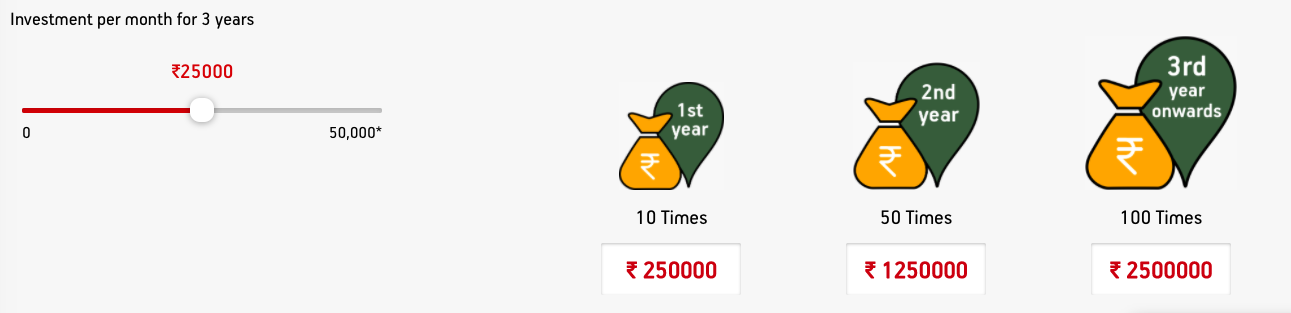
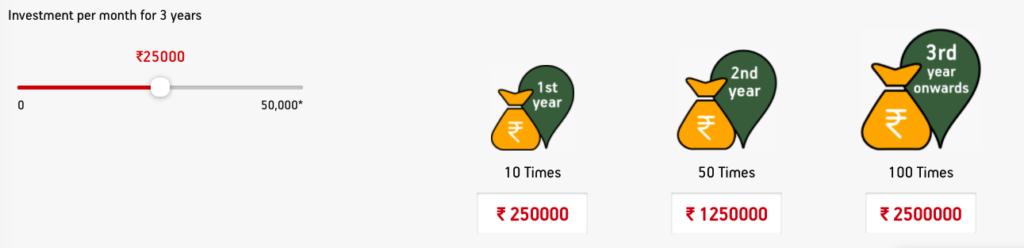
Where this veers away from the above quoted LIC examples is that endowment policies pay out the originally promised amount and a bit of value addition. That may seem ok on the date that policy was taken. But when it matures 20 years later, it is hardly a life-changing amount. We’ve said this enough times on this blog, and we’ll say it again – insurance and investment are separate, and should be treated so. Earlier, Insurance was paramount and investment wasn’t on people’s minds. Today, it has become the other way around. Insurance has become a by-product of investment, but it is still important to treat them separately. Many mutual fund houses have policies in which the investor gets into a monthly SIP, and for the chosen term, a free insurance cover of up to 100x the monthly investment is offered as a term policy at no extra cost. The cost of the insurance underwriting is borne by the investment company. That is quite novel! We’ll write a separate post about that later, but to illustrate the point of insurance becoming a by-product, this is a classic example.
Wrapping up this post, yes, insurance policies are absolutely worth it. In fact, they are quite necessary. However, have clarity on what insurance cover you should be having, and what kind of a policy fits your age, investing ability, and requirements. If you need help understanding this further or have a particular question, you can reach out to us via any of our Social Media accounts – Twitter, Facebook, Quora.