What is an Exchange traded fund?
 0
0
 1
1
We’re happy you asked this question. Most investors just stick to the typical mutual funds and trust their fund manager to make all their decisions. If you’re researching about ETFs, you’re already better informed that most Indians, and probably make wiser decisions about your investments than most people out there.
An exchange traded fund is not actually a mutual fund in the true sense of the word – i.e. it is not bought or sold through your mutual fund platform, but it is transacted through your brokerage account. So you would need a demat account through one of the SEBI registered stock brokers to buy and sell ETF units. Like with a mutual fund, these also are bought and sold in units and the NAV is tracked in realtime whereas with a normal fund it is updated once every day.
The reason we said you were wiser than most people is because an ETF doesn’t require you to do much research on sectors, possible opportunities etc. It piggybacks on top of solid research of hundreds of managers working on the indices themselves! For instance, Nifty is made up of 50 stocks. These 50 are dynamic, i.e. they are added or removed based on performance and forward projections. Nifty is run by the NSE based out of Delhi, and our older index Sensex is operated by BSE in Mumbai. Sensex is comprised of 30 stocks. Many stocks would be similar between both indices, while their weightage may be different. Sensex, for instance, has ~16% weightage to Reliance and ~10.5% to HDFC Bank. Nifty has ~14% to Reliance and 9.5% to HDFC Bank. These two stocks are the top components of both indices. Now the good thing about trusting an index to grow is that they are privately managed and need to show a healthy return to their investors. NSE itself is planning to come up with an IPO shortly. So it is in their interest to keep performing stocks as their key components and weed out stocks which aren’t growing as well. An example would be YES Bank, which is no longer in the Nifty index.
Buying an ETF unit would mean you buy all the stocks in the index in the proportions they are held by the index itself. So if you’re buying a unit of Nifty ETF, you actually own all 50 stocks indirectly, in the % they are assigned in the index. When a stock % is changed by the exchange or when a stock is added or removed, that is automatically applied to all ETF unit holders. Since they are traded on the exchange directly, these units can be bought or sold in realtime, and if you buy into a good ETF with healthy trading volume, the trade is executed almost instantly, like it is with a stock.
There are several types of ETFs available to investors in India. The most popular of them are the exchange indices themselves – Nifty, Sensex, BankNifty etc, as they are closely tracked by a majority of investors and always have a good volume, enabling an instant trade – whether buy or sell – at market prices. There are ETFs available to track NASDAQ, Gold, and many of the smaller indices in our markets. They move exactly like the index they are tracking, making them easy for us to predict. ETFs have a very low expense ratio when compared to mutual funds. That is because the fund managers don’t need to use their own research but instead use what NSE and BSE are already doing. Since you’re indirectly buying into all the stocks in the index through an ETF, you will also be eligible to get dividends as announced by the whole stock basket. Total dividend received by the ETF is passed along as-it-is on a pro-rata basis to all investors. That is credited directly to your bank account like it is with a stock dividend.
Think of Nifty or Sensex like a barometer of the nation’s economy. They will always aspire to grow at a steady rate. Some years may make 30% and some years may be -10%, but since they are made up of a basket of stocks, they’ll usually grow at a healthy level – plus there are dividends to be made. Warren Buffett, the greatest investor of our generation, strongly recommends ETFs to all investors since it takes research out of question. While filing taxes, ETFs have indexation benefit as well.
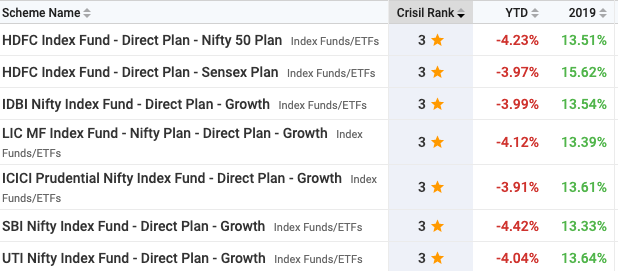
Ok, so ETFs sound good. But what if you wish to have the same benefit without a demat account? That is where Index funds come into play. They are pretty similar to an ETF, and replicate an index just like an ETF does, but they come to us in the form of a mutual fund unit. There’s no exit load on an index fund and the expense ratio is much lower than that of a normal mutual fund. They offer almost the same benefit as an ETF does, and these funds are available through all major fund houses. Since they don’t need their own research to be used, they all perform almost similarly – since the index itself is the same.
So if you’re an investor who wishes to seriously invest in our equity markets, but don’t have the time or ability to research and keep track, the safest bet is an ETF or an Index fund. They’re quite under-rated, and are among the best long-term wealth generation options available to us. If you have a specific query on exchange traded funds or index funds, feel free to reach out to us via any of our Social Media accounts – Twitter, Facebook, Quora.